

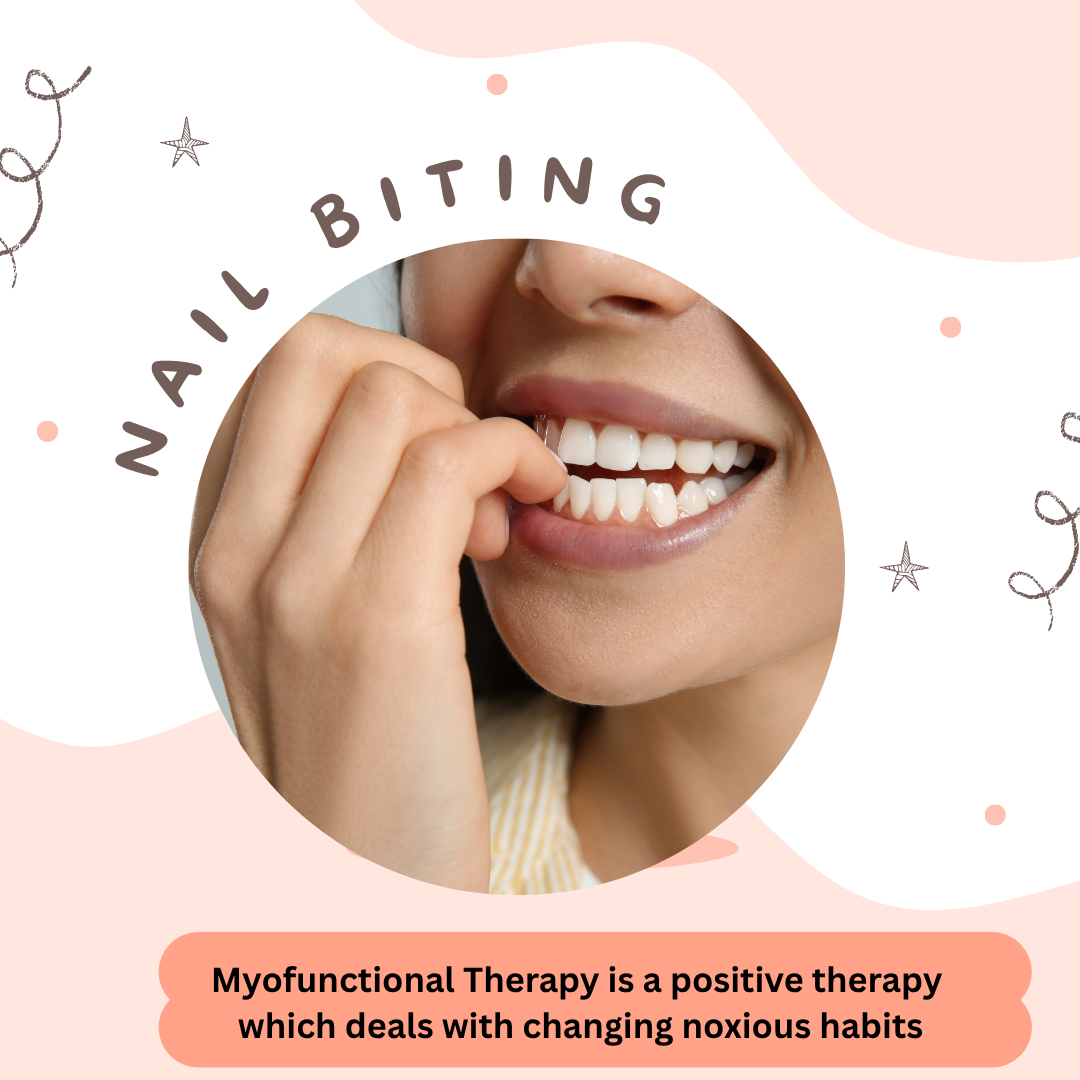
Orofacial Myofunctional Therapy and Nail Biting
In myofunctional therapy, nail biting is classified as a noxious oral habit and a Body-Focused Repetitive Behavior (BFRB). Officially known as onychophagia, it is a behavior that goes far beyond a simple cosmetic issue—it directly impacts the structural health of the mouth, teeth, and jaws.
Here is a breakdown of how nail biting connects to myofunctional dysfunction and how therapy addresses it:
The Impact of Nail Biting on Oral Health
When a person chronically bites their nails, they subject their oral system to repetitive, unnatural forces. This creates a cascade of myofunctional problems:
-
Altered Oral Rest Posture: To bite a nail, the jaw must shift forward or to the side, and the tongue must drop from its ideal resting position (flat against the roof of the mouth). Over time, this trains the tongue and lips to adopt a low, open-mouth resting posture, which can lead to habitual mouth breathing.
-
TMJ Strain and Jaw Pain: The constant, asymmetric shearing force required to bite through a nail places immense stress on the temporomandibular joint (TMJ) and the chewing muscles (masseters). This frequently triggers jaw clicking, popping, tension, and chronic headaches.
-
Dental Shift and Damage: The localized pressure can physically micro-move teeth out of alignment, contributing to crowding, gaps, or an open bite. It also causes premature wear, chipping, and cracking of the dental enamel, particularly on the front teeth.
How Myofunctional Therapy Helps
Myofunctional therapy does not just treat the symptoms; it focuses on positive behavior change and neurological re-patterning to eliminate the habit permanently.
-
Building Habit Awareness: Because nail biting is almost always an unconscious, automatic behavior, therapy begins by helping the patient identify their specific triggers (boredom, stress, screen time) and physical warning signs before the hand reaches the mouth.
-
Competing Response Training: Therapists implement behavioral modifications, introducing a “competing response”—a harmless, alternative physical action that makes it physically impossible to bite the nails when the urge strikes.
-
Re-Training Muscle Memory: Once the destructive habit is minimized, targeted exercises restore optimal tone and balance to the facial and jaw muscles. Therapy builds the strength and muscle memory required to keep the lips gently sealed and the jaw in a relaxed, neutral position.
-
Establishing Correct Tongue Posture: Therapists guide the tongue back to its proper home on the palate. A correct tongue posture acts as a natural internal stabilizer for the dental arches and the jaw, counteracting the structural damage caused by years of nail biting.