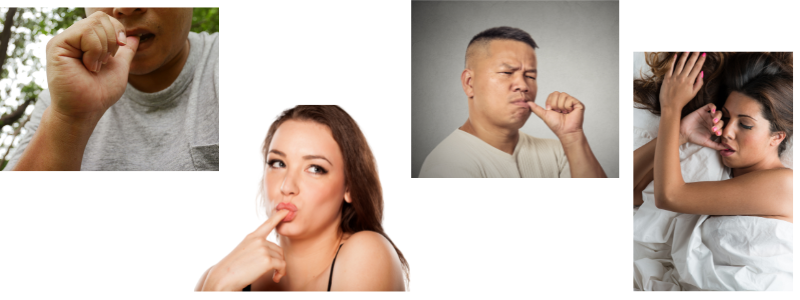


Orfacial Myofunctional Therapy and Adult – Finger, Tongue, and Thumb Sucking
While precise clinical data is limited due to the social stigma surrounding it, surveys and anecdotal evidence suggest that roughly 1 in 10 adults (around 10% to 12%) continue a childhood digit-sucking habit. Because it is almost exclusively done in private, it remains a hidden habit.
Here is how adult finger and thumb sucking breaks down in terms of prevalence and its impact on orofacial myofunctional health:
Why It Persists in Adults
For adults, the habit is rarely just a “leftover childhood quirk.” It is deeply biological and psychological:
-
Neurological Calming: Sucking releases endorphins, inducing a calming, regulating effect that acts as a powerful coping mechanism for stress, boredom, or anxiety.
-
Involuntary Sleep Habit: Many adults only do it unconsciously while sleeping or falling asleep.
The Myofunctional Impact on Adults
While a child’s jaw is still growing and highly malleable, a prolonged adult habit still causes significant structural and functional issues because of the constant, repetitive pressure:
-
Dental Shifting (Malocclusion): It continues to apply force to fully erupted permanent teeth, leading to or worsening an anterior open bite (where the front teeth don’t meet) or causing teeth to flare outward.
-
Altered Palate & Jaw Dynamics: Vigorous sucking flexes the cheek muscles, which can create a narrow, vaulted hard palate and contribute to a crossbite or jaw joint (TMJ) discomfort.
-
Low Tongue Rest Posture: Because the thumb occupies the roof of the mouth, the tongue is forced down and forward. This prevents the tongue from resting in its natural spot, which is the foundational cause of a tongue thrust and improper swallowing patterns.
-
Airway and Speech Implications: The resulting structural changes often lead to chronic mouth breathing, sleep-disordered breathing, or speech issues like a lisp.
In the Therapy Room
In a myofunctional therapy practice, adult habit cessation programs are highly relevant. Therapists look at it not as something to judge, but as a muscle pattern and airway restriction puzzle that needs to be solved so the resting posture of the mouth can finally heal.