

What is Sleep Disordered Breathing
Sleep-Disordered Breathing (SDB) is an umbrella term that covers a spectrum of breathing difficulties during sleep, ranging from frequent, loud snoring and upper airway resistance syndrome (UARS) all the way to obstructive sleep apnea (OSA).
In myofunctional therapy, SDB is viewed primarily as a dysfunction of the upper airway muscles and oral posture. Here is how Orofacial Myofunctional Therapy (OMT) connects to, explains, and helps manage Sleep-Disordered Breathing:
The Cascade of Sleep-Disordered Breathing
Sleep-Disordered Breathing often begins long before a person ever stops breathing at night. It typically follows a predictable muscular path:
-
Chronic Daytime Mouth Breathing: When the mouth rests open during the day, the muscles of the lips and cheeks lose tone.
-
Low Tongue Posture: An open mouth forces the tongue to drop to the floor of the mouth instead of resting flat against the palate.
-
The Nighttime Collapse: When a person lies down to sleep, a low, weak tongue naturally slides backward into the throat due to gravity. Combined with a lack of tone in the surrounding airway tissues, the airway narrows, creating the vibrations we hear as snoring or the micro-arousals typical of UARS.
How Myofunctional Therapy Addresses SDB
While conventional treatments like CPAP or oral appliances act as structural “splints” to physically hold the airway open, myofunctional therapy focuses on active rehabilitation of the airway system.
-
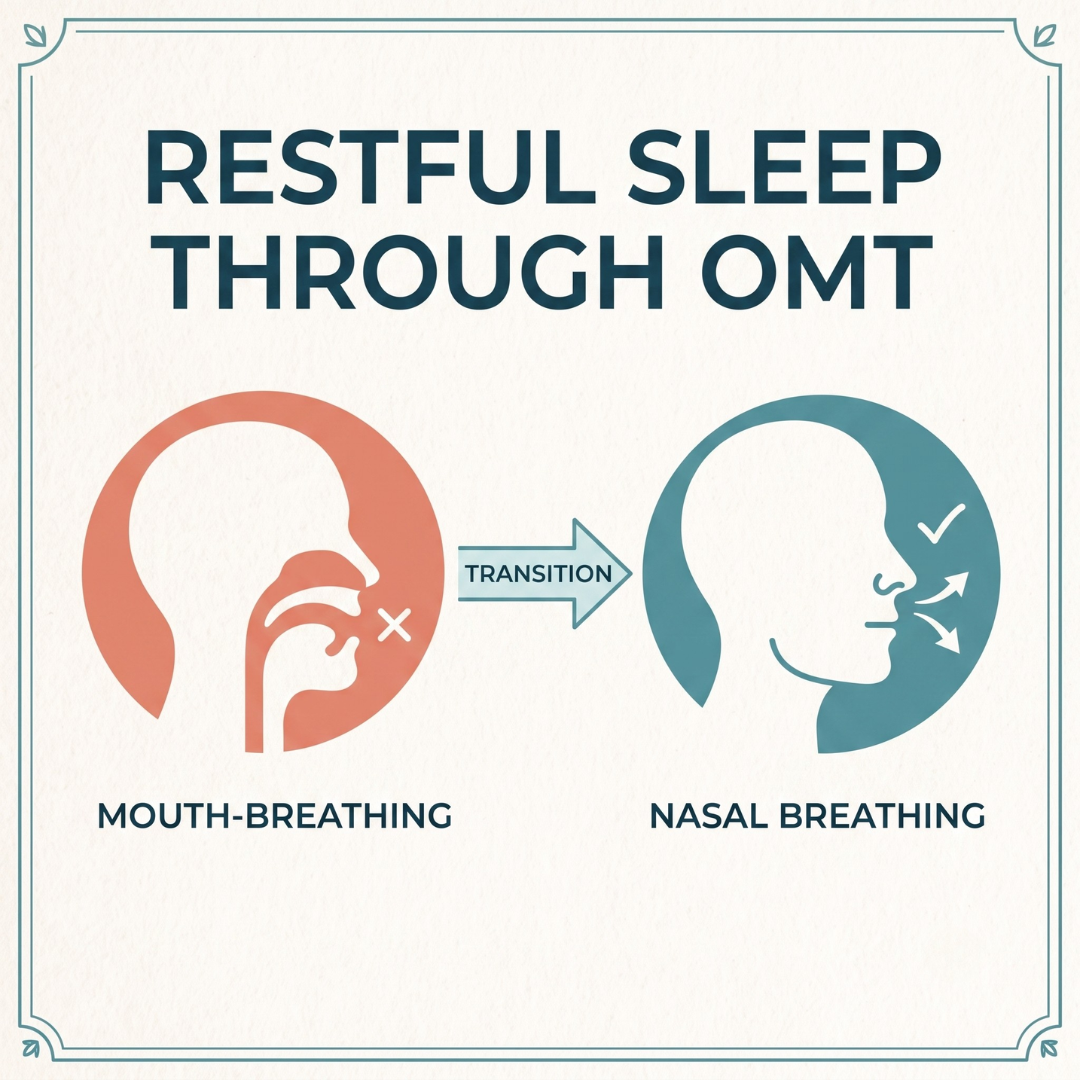
Re-establishing Nasal Breathing: OMT focuses heavily on transitioning individuals from mouth breathing to exclusive nasal breathing. Nasal breathing increases nitric oxide intake, naturally filters the air, and exerts a gentle, stabilizing pressure that keeps the airway from collapsing.
-
Elevating Tongue Posture: By training the tongue muscle memory to permanently suction against the roof of the mouth, it acts as an internal support beam, keeping the base of the tongue firmly out of the throat during sleep.
-
Toning the Pharyngeal Wall: Just like physical therapy for a knee or shoulder, targeted throat and soft palate exercises condition the airway muscles. This increased tone prevents the tissues from becoming “floppy” and vibrating or collapsing when the body relaxes into deep sleep.
-
Eliminating Compensatory Habits: OMT helps eliminate noxious daytime oral habits (like jaw clenching or lip biting) that can fatigue the facial muscles and worsen airway tension at night.
Why Early Intervention Matters in Children
In pediatric cases, Sleep-Disordered Breathing can look very different than it does in adults (often manifesting as bedwetting, night sweats, restless sleep, or ADHD-like behavioral symptoms).
When young children suffer from SDB, the constant low tongue posture fails to gently push the upper jaw outward as they grow. This leads to narrow arches, crowded teeth, and a high-arched palate, which further restricts the nasal cavity. By introducing myofunctional therapy early alongside orthodontic or ENT guidance, therapists can help guide proper facial development, expanding the airway naturally before bone growth ceases.
Are you looking at this topic to build out an educational resource for your website’s library, or are you looking for specific screening clues that help patients identify if they have SDB?
In children sleep is where they grow and develop, behavioral and learning issues can arise.
Please take a moment to watch the video below.
Find a Myofunctional Therapist to learn more