
Orofacial Myofunctional Therapy and Short Upper Lip
In myofunctional therapy, a “short upper lip” is a common structural and muscular issue that is heavily tied to how a person breathes, rests their mouth, and swallows.
Here is a breakdown of how they connect, what causes it, and how therapy addresses it:
The Connection Between the Lip and Muscle Function
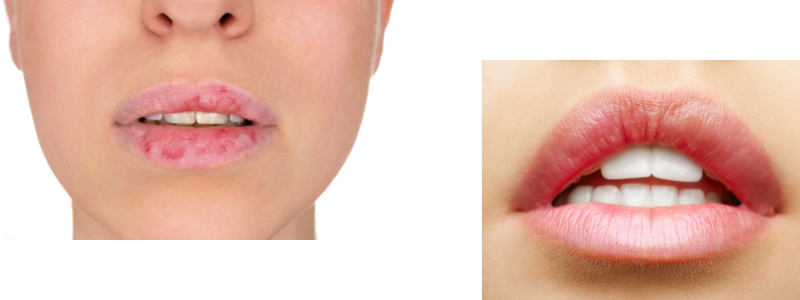
A short upper lip is frequently associated with lip incompetence—a condition where the lips do not naturally come together at a relaxed state. Instead of a natural, effortless seal, a person has to actively force their lips closed, which often causes the chin muscles (the mentalis muscle) to strain and wrinkle.
When the lips are constantly parted, it creates a cascade of myofunctional issues:
-
Mouth Breathing: Without a proper lip seal, nasal breathing becomes difficult to maintain, leading to habitual mouth breathing.
-
Altered Jaw Growth: Constant mouth breathing changes the way the facial muscles pull on the bones, which can actually cause the upper jaw (maxilla) to grow downward and backward, making the upper lip appear even shorter.
-
Tongue Posture: If the mouth is open, the tongue cannot rest where it belongs—flat against the roof of the mouth. Instead, it drops to the floor of the mouth, which can contribute to narrow dental arches, an open bite, or a crossbite.
What Causes a Short Upper Lip?
While some aspects are genetic, a short upper lip is often an acquired muscular trait due to long-term habits:
-
Chronic Mouth Breathing: Caused by allergies, enlarged tonsils/adenoids, or a deviated septum. The muscles of the upper lip simply atrophy and shorten from lack of use.
-
Tethered Oral Tissues (Lip Ties): A tight upper labial frenum (the tissue connecting the lip to the gums) can physically restrict the lip, pulling it upward and preventing it from lengthening or sealing properly.
-
Prolonged Noxious Habits: Extended thumbsucking, pacifier use, or finger biting can alter the bony structure of the palate and push the front teeth forward, making it physically harder for the upper lip to cover the teeth.
How Myofunctional Therapy Helps
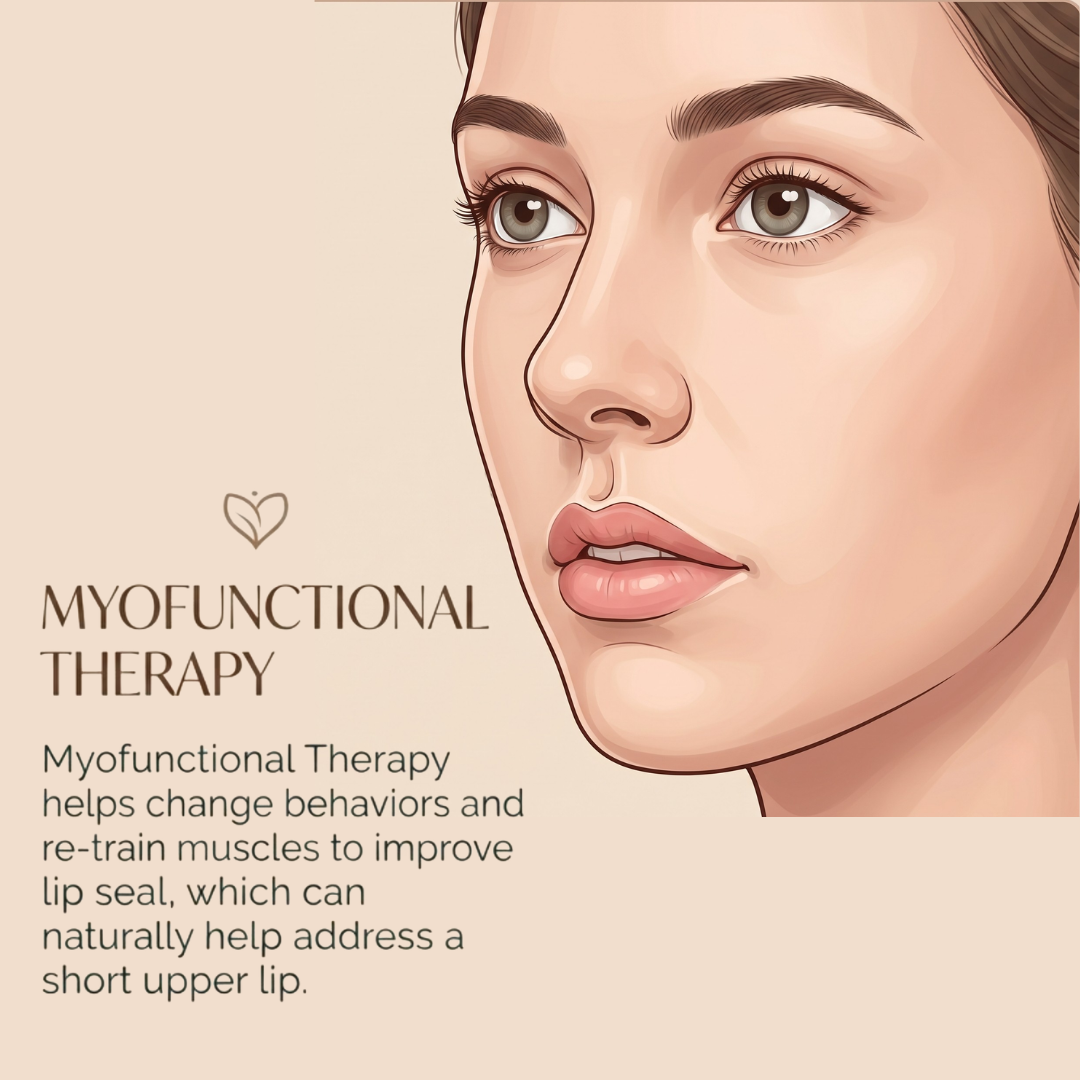
Myofunctional therapy doesn’t change the actual genetic length of the bone, but it dramatically changes the tone, length, and behavior of the soft tissue. It works by:
-
Lengthening and Toning the Muscles: Specific exercises target the orbicularis oris (the ring-like muscle around the lips). Passive stretching and active resistance exercises help elongate a tight, short upper lip.
-
Establishing a Habitual Lip Seal: Therapy builds the muscle memory required to keep the lips closed effortlessly at rest, transitioning the patient from mouth breathing to nasal breathing.
-
Correcting Tongue Posture: By training the tongue to rest firmly on the roof of the mouth, it acts as an internal support structure for the upper jaw, balancing out the external pressure of the newly strengthened lip muscles.
-
Coordinating with Other Specialists: If a severe lip tie is the root cause, a myofunctional therapist will work alongside a tongue/lip-tie release provider (frenectomy) to provide pre- and post-op exercises so the lip doesn’t reattach and shorten again.